

Blog
TDD for readable code

Pieter Vercammen
Written on 10 Mar 2026
Back-End
Testing
How test-driven development makes your code clear and flexible
In software development, it’s about writing code that doesn’t just work, but is easy to understand and adapt. Too often, code functions correctly, but as soon as changes are needed, hesitation kicks in.
That’s where Test-Driven Development (TDD) comes in: a powerful technique that makes your code more reliable, readable, and flexible.
I. The challenge of readable code
As a developer, you’re often focused on delivering solutions quickly. But once the application is running, the real question arises: how do you keep that code readable and maintainable, especially when changes are required? The problem is familiar: the code works, but the fear of breaking something with a small change makes you hesitant to improve it.
II. The hurdle of manual changes
Many developers write unit tests to validate their code after the code is finished. But as complexity grows, so does the maintenance burden. Every change requires updating multiple tests, turning refactoring into a time-consuming chore. TDD changes that dynamic.
What is TDD and how does it help?
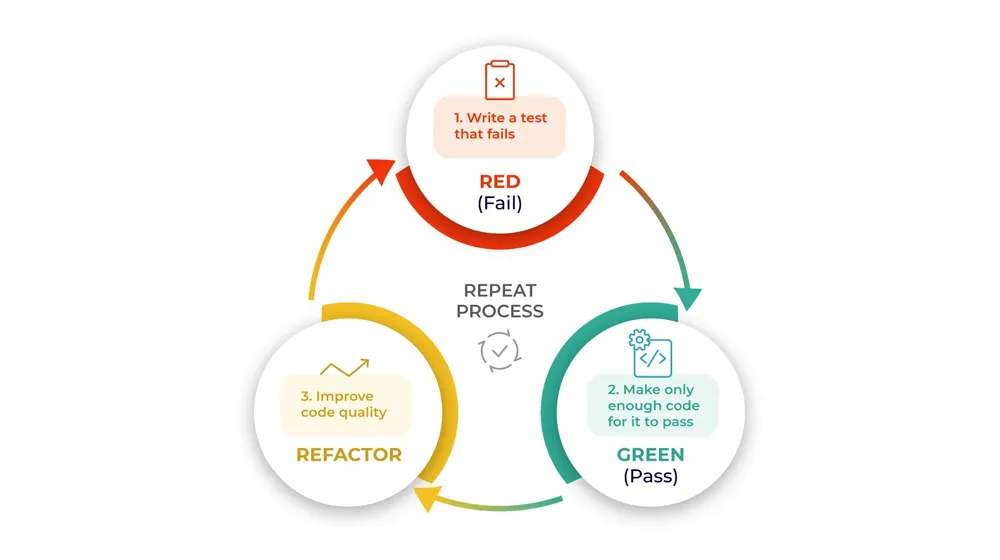
TDD is an approach where you write tests before writing the actual code. It may sound unusual, but the benefits for both the quality and flexibility of your software are significant:
1. Better design decisions
TDD forces you to think about behavior over implementation. By defining what the code should do first, you naturally move toward modular design. This creates a flexible foundation that is easier to adapt, rather than getting stuck in the details.
2. Reduced coupling
With TDD, you write more loosely coupled code. Because you focus on behavior rather than implementation, you avoid making your code too dependent on other parts of the application. The result? Refactoring becomes much easier, without constantly having to adjust your tests.
3. Fast feedback
TDD provides immediate feedback. As soon as you make a change, you instantly see if something breaks. This constant insight into core functionalities makes refactoring far less stressful and much more controlled.
4. Smaller, focused tests
TDD encourages targeted testing. These are easier to understand and keep your codebase well-structured. Smaller tests identify errors faster and keep maintenance efficient. In short: efficient work without the hassle.
5. Strengthened documentation
Tests act as living documentation of your code. They capture what the code should do without unnecessary technical details about how it works. This makes it much easier for other developers to understand and build upon your code.
6. Increased confidence when refactoring
By working with TDD, you always have a solid set of tests covering your code. This gives you the confidence to make changes, add features, or refactor, knowing that your tests ensure everything continues to work as expected.
Conclusion
TDD is much more than a way to guarantee working code. It’s a powerful technique for writing readable, flexible, and well-structured code. By writing tests first, you not only improve the quality of your code, but also create a development environment where you can refactor and adapt without worry.
So why wait? Dive into TDD and make your code not just robust, but also readable and flexible.
< Keep reading />
More from our team
Explore more insights, tips, and deep dives from the CraftCode team.
Let's get to work!
Ready to turn your vision into reality?
Let's build the systems that power your growth.